
Prepared by the Editorial Desk
The debate over the future of UNIFIL in southern Lebanon is no longer confined to military and technical matters related to withdrawal and redeployment. It has entered a more complex political phase after Hezbollah Secretary-General Sheikh Naim Qassem set a clear condition on Wednesday, November 25, 2026, for any new international arrangements in the south, announcing that the party would consider any international force not operating under the umbrella of the United Nations and within the framework of Resolution 1701 to be an “occupation force,” whatever its name or the nature of its mission.
The position comes as international capitals, particularly Paris and Washington, work to find a formula that would ensure the continuation of some form of international presence after UNIFIL’s scheduled operations end on December 31, 2026.
The significance of Qassem’s statement lies not only in its rejection of a foreign military presence outside the UN framework, but also in the political limits it sets on the nature of any mission, its powers and the authority under which it operates.
As a result, the Lebanese government faces a challenge that goes beyond negotiations with the Security Council and participating countries. It must also ensure that any new arrangements are accepted domestically and prevent disagreement over the form of the international force from becoming a new political and security crisis.
First: What exactly did Naim Qassem say?
Qassem tied the legitimacy of any new international force to two basic conditions:
- It must operate under the umbrella of the United Nations, within a clear international mandate.
- Its mission must be consistent with Resolution 1701 and the cessation-of-hostilities agreement announced in November 2024.
He also rejected replacing Resolution 1701 and the cessation-of-hostilities agreement with what he described as the U.S. framework agreement, saying the agreement announced in Washington on June 26, 2026, was unconstitutional and illegal and had been concluded under pressure and coercion.
He said the party would consider any force that did not comply with these benchmarks to be an occupation force.
The position sends a political message to the Lebanese government and international parties: the party will not treat any new military deployment as merely a change in the force’s name or nationality, but will judge it by the nature of its mission, its frame of reference and its powers.
Accordingly, any international proposal that grants a new force powers beyond the framework of Resolution 1701 could face sharp political opposition, even if it is reached through negotiations between the Lebanese government and foreign capitals.
Second: Why does this position pose a challenge for the government?
The Lebanese state is seeking to avoid a potential security vacuum in the south after UNIFIL’s scheduled operations end.
The government needs an international mechanism to help monitor the Blue Line, document violations, facilitate communication between the parties and support the deployment of the Lebanese army.
But Qassem’s position adds a political condition to these negotiations: any alternative force must remain within the framework of the United Nations and Resolution 1701.
This presents the government with a dilemma:
- If it accepts a European or international force operating outside the UN framework, it could face political and on-the-ground opposition from Hezbollah.
- If it insists on a force under a Security Council mandate and Resolution 1701, it will need international consensus, which may be difficult to achieve because of disagreements among the permanent members.
- If no agreement is reached, UNIFIL could begin withdrawing without a fully established alternative mechanism in place.
- And if the force’s international powers remain unresolved, internal disputes could grow over who is responsible for monitoring the borders and managing security incidents.
The stated position therefore narrows the political options available to the authorities and means that any new international understanding will need to address domestic opposition before moving to implementation.
Third: What does Resolution 2790 provide for regarding UNIFIL’s withdrawal?
On August 28, 2025, the Security Council adopted Resolution 2790, which extended UNIFIL’s mandate for the final time until December 31, 2026.
But there is a key detail that should not be overlooked: the end of scheduled operations at the end of December does not mean that all international forces will leave on the same day.
The resolution provides for an end to the mission’s scheduled operations on December 31, 2026, and for the start, from that date, of a force reduction and an orderly and safe withdrawal over the course of one year.
During the withdrawal phase, the resolution allows UNIFIL to continue carrying out limited tasks, including protecting UN personnel and facilities, monitoring conditions around its positions, escorting some humanitarian movements and helping protect civilians within its capabilities.
The resolution also calls on the Lebanese government to become the sole authority responsible for security in southern Lebanon.
This means the transition period will continue through 2027, and any new arrangements need to be considered alongside the withdrawal plan, not after it is completed.
Fourth: Can a new international force be established under a Security Council mandate?
The United Nations has put forward three options for the future of the international presence after UNIFIL’s mission ends. They differ in the number of military observers, the size of supporting forces, and monitoring and intervention capabilities.
These options share a commitment to maintaining an international framework that helps monitor the Blue Line, facilitate communication and reduce the risk of escalation.
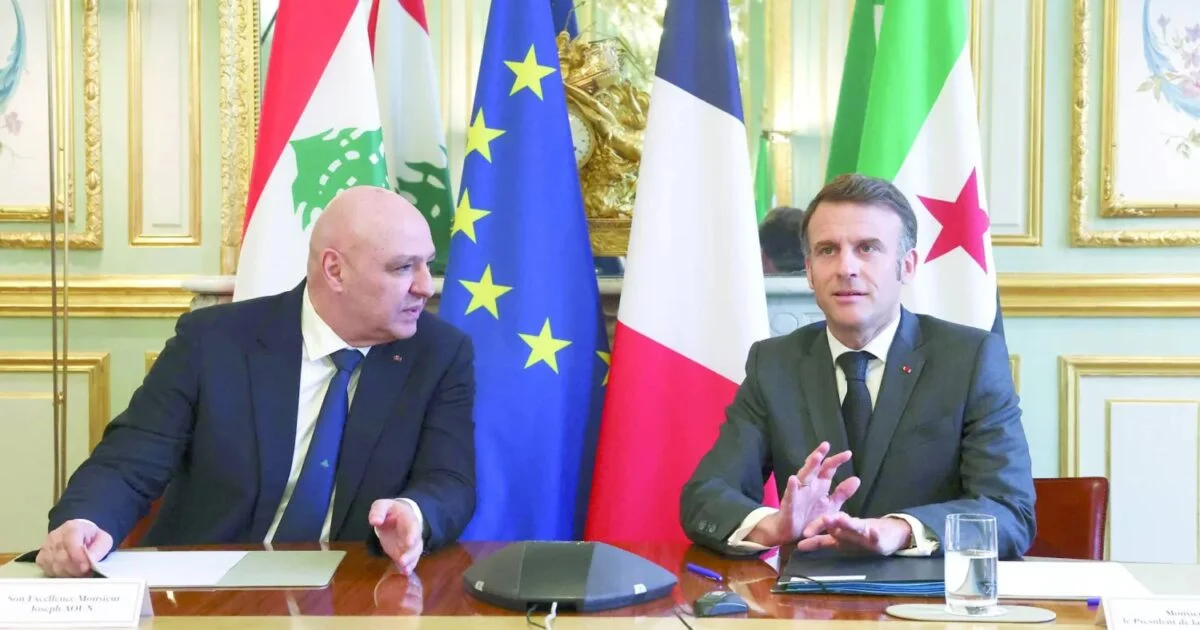
France, mean while, is exploring a smaller European force than the current UNIFIL, while some European countries have expressed interest in taking part in future arrangements.
But any new mission established by a Security Council resolution would require the council’s approval, including the absence of a veto by any of its five permanent members.
The Lebanese government alone cannot guarantee that such a resolution will be adopted, even if it reaches a domestic consensus on the nature and mission of the force.
Disagreements between Washington and some Security Council members over UNIFIL’s future also add complexity to the negotiations.
According to the Security Council Report’s November 2026 forecast, the council remains divided over the future of the international presence, with the possibility raised of an exceptional six-month delay to UNIFIL’s force reduction if agreement on subsequent arrangements cannot be reached.
Fifth: Does any force without a UN mandate legally become an occupation force?
Here, it is necessary to distinguish between the political position announced by Qassem and the legal definition of occupation under international law.
Under Article 42 of the 1907 Hague Regulations, territory is considered occupied when it is actually placed under the authority of a hostile foreign army that is capable of exercising that authority.
The International Committee of the Red Cross explains that the determination of occupation depends on the facts on the ground and does not depend solely on whether a Security Council mandate exists.
The key criteria include:
- The presence of foreign forces on the territory of another state without that state’s consent.
- The forces’ ability to exercise effective authority in place of the local authorities.
- The inability of the territorial state to exercise its authority effectively in the area concerned.
Accordingly, the absence of a Security Council mandate does not automatically turn a foreign force into an occupation force if it is present with the valid consent of the Lebanese state and operates within the limits of that consent.
But if a foreign force is deployed without the state’s consent, or exercises effective authority over its territory in circumstances that meet the conditions for occupation, the legal classification will be subject to the standards of international humanitarian law.
This distinction is extremely important: Qassem’s description represents a political and security red line announced by the party, but it does not in itself constitute an international legal ruling on any future force.
Sixth: What scenarios does Lebanon face?
Four main paths can be identified:
Scenario one: A new UN force under Resolution 1701
The government reaches an agreement with the countries concerned, and the Security Council adopts a new resolution defining the nature of the mission, its powers and its deployment.
This option is consistent with the condition announced by Qassem, but requires international consensus.
Scenario two: An exceptional extension of the transition period
A limited delay to UNIFIL’s force reduction is considered if agreement on an alternative force cannot be reached.
This option was among the scenarios discussed in the Security Council’s November report, but it would require a new resolution.
Scenario three: An international force outside the UN framework
Some countries may propose a multinational force with the consent of the Lebanese government, but without a direct UN mandate.
In this case, Hezbollah’s announced position would be a key factor in decisions on participation and deployment, since the party has already said it would consider such a force an occupation force.
Scenario four: UNIFIL withdraws without a fully established international alternative
In this case, responsibility for security in the south would fall to the Lebanese army and official agencies, given the prevailing conditions and constraints on the ground.
This scenario could leave gaps in some international monitoring and coordination functions, particularly if the issue of border violations and communication mechanisms is not addressed.
Seventh: What does this mean for Lebanese sovereignty?
These developments put the concept of sovereignty to a practical test.
The Lebanese government is required to uphold the state’s right to determine the nature of forces deployed on its territory while also ensuring that the south is not left with a security vacuum or arrangements imposed from abroad.
Resolution 2790 itself also calls for the extension of the Lebanese state’s authority over all its territory and for there to be no weapons or authority outside the framework of the Lebanese government.
This opens a broader debate about the relationship between Resolution 1701, the Taif Agreement, the state’s monopoly on weapons and the authority of constitutional institutions.
For Hezbollah, the statement rejects any international arrangements it considers to fall outside the UN framework or to go beyond Resolution 1701.
Three levels of disagreement thus intersect: the international framework, Lebanese political decision-making and the security powers of the force that will operate in the south.
Conclusion: The government faces a test of negotiation, decision-making and sovereignty
Naim Qassem’s statement on November 25 adds a new dimension to the crisis over UNIFIL’s future, turning the nature of an alternative force from a matter of international negotiations into a potential source of domestic conflict.
The Lebanese government is not negotiating only over troop numbers, missions, monitoring and deployment. It also faces a publicly stated political condition tying acceptance of a new force to the authority of the United Nations and Resolution 1701.
But the issue cannot be settled by a political statement, nor can any force without a UN mandate automatically be considered an occupation force under international law.
The real test will be whether the state can reach a formula that safeguards its sovereignty, has international backing, prevents a security vacuum and ensures that the question of international forces does not become another cause of domestic confrontation.
With December 31, 2026, approaching, the central question is this: Can Lebanon reach an international and domestic understanding on the future of the south before UNIFIL begins its orderly withdrawal, or will the country enter a new phase of dispute over who has the right to determine the form of the security presence on its territory?
Key references:
- UN Security Council, Resolution 2790 (2025).
- United Nations Security Council Report, Lebanon Forecast for November 2026.
- UPI, Naim Qassem’s statement on the international force, November 25, 2026.
- International Committee of the Red Cross, definition of occupation under international humanitarian law.
- 1907 Hague Regulations, Article 42.
- UN Secretary-General’s report on options for an international presence after UNIFIL, June 2026.